
Hear from Our Customers
Most people don’t call about mold testing because they’re curious. You’re calling because something’s off. Maybe it’s a musty smell that won’t go away. Maybe you’ve seen discoloration on the ceiling or around a window. Maybe someone in your house has been coughing more than usual and you can’t figure out why.
Here’s what happens when you get real testing done. You stop wondering if there’s a problem and start knowing what the problem actually is. Air sampling and surface testing tell you if mold is present, what type it is, and how much of it you’re dealing with. That matters because black mold requires a different response than surface mildew.
You also get a clear picture of where the moisture is coming from. Mold doesn’t grow without water. If you’ve got mold, you’ve got a leak, condensation issue, or humidity problem somewhere. We use moisture meters and infrared cameras to find it, even if it’s behind drywall or under flooring.
Once you know what you’re dealing with, you can make an informed decision. Not every mold situation requires full remediation. Some do. Testing gives you the facts so you’re not overpaying for work you don’t need or ignoring a problem that’s about to get expensive.
We’ve been handling mold issues in Bucks County for over 27 years. We’re not a national franchise that showed up last year. We know the homes here, the basements that flood every spring, the older construction that traps moisture, and the humidity that rolls in every summer.
Our inspectors are certified and trained to follow EPA guidelines. We’re not showing up with a flashlight and a hunch. We’re using calibrated equipment to measure what’s actually happening in your home.
You’ll work with people who live in this area and have seen these problems hundreds of times. That experience means we can usually tell you what’s going on before the lab results even come back. But we still run the tests, because you deserve documentation, not just an opinion.
First, we schedule a free inspection. You show us the areas you’re concerned about and we’ll check those plus the spots most people miss—crawl spaces, attics, behind appliances, around HVAC systems.
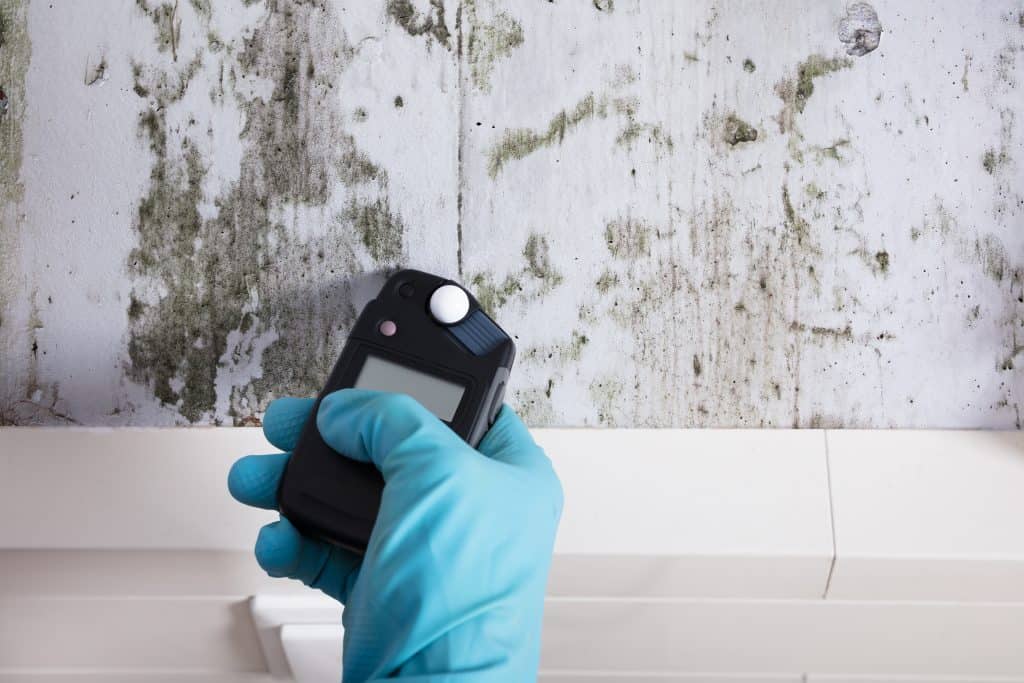
We use moisture meters to measure humidity levels in walls, ceilings, and floors. High moisture readings tell us where mold is likely growing, even if you can’t see it yet. Infrared cameras let us see temperature differences that indicate water intrusion or poor ventilation.
If we find visible mold or high moisture levels, we’ll recommend air sampling or surface testing. Air samples measure mold spore concentration in your indoor air compared to outdoor levels. Surface samples identify the specific type of mold present. Both get sent to an independent lab for analysis.
You’ll get a full report within a few days. It’ll show you what was found, where it was found, and what the lab identified. We’ll walk you through the results in plain language and explain what needs to happen next. If remediation is necessary, we’ll give you a detailed estimate. If it’s something you can handle yourself, we’ll tell you that too.
The whole process usually takes a few hours for the inspection and testing, then a few days for lab results. You’re not left wondering. You get clarity.
Ready to get started?
When you hire us for mold testing in Margo Gardens, you’re getting a thorough assessment of your indoor air quality and moisture conditions. We inspect visible areas and hidden spaces where mold typically grows. That includes basements, crawl spaces, attics, bathrooms, and anywhere we find elevated moisture.
We bring moisture meters, infrared cameras, air sampling equipment, and surface testing tools. If your situation calls for it, we’ll use a borescope to look inside walls or under floors without tearing anything apart.
Bucks County homes deal with specific challenges. Older homes in this area weren’t built with the same moisture barriers and ventilation systems you see in new construction. Basements here are notorious for seeping water after heavy rain. The humidity in summer creates perfect conditions for mold growth, especially in poorly ventilated bathrooms and laundry rooms.
We also know that a lot of Margo Gardens properties are near wooded areas, which means more shade, slower drying times, and higher moisture around foundations. These aren’t just things we read about. We see them every week.
After testing, you’ll receive documentation that’s detailed enough to share with your insurance company if you need to file a claim. We’ve worked with most of the major insurers in this area and we know what they require.
Testing costs vary depending on the size of your home and how many samples you need. A basic inspection with one or two air samples usually runs a few hundred dollars. If you need multiple surface samples or testing in several rooms, it’ll cost more.
Here’s the thing—testing isn’t always necessary. If you’ve got visible mold and obvious water damage, you already know you have a problem. In that case, you might be better off skipping the test and going straight to remediation. Testing makes the most sense when you’re experiencing symptoms but can’t find the source, when you’re buying or selling a home, or when you need documentation for insurance or legal reasons.
We offer free inspections, so we can take a look and tell you honestly whether testing is worth the cost in your situation. Some companies push testing on everyone because it’s an easy upsell. We’d rather you spend money on fixing the actual problem.
An inspection is a visual assessment. We walk through your property, look for signs of mold growth, check moisture levels, and identify conditions that promote mold. You’ll get our professional opinion on whether you have a problem and where it’s likely coming from.
Testing goes further. We collect air or surface samples and send them to a lab for analysis. The lab identifies the specific types of mold present and measures spore concentrations. This gives you hard data instead of just observations.
Most people start with an inspection. If we find something concerning or if you need documentation for insurance or a real estate transaction, then we recommend testing. You don’t always need both. If there’s visible mold and an obvious moisture source, testing won’t tell you much you don’t already know. But if your symptoms suggest mold and we can’t find it during the inspection, air testing can confirm whether spores are present at elevated levels.
Lab results typically come back in three to five business days. The samples we collect get sent to an independent certified lab that specializes in mold analysis. They’re looking at spore counts, identifying species, and comparing your indoor air quality to outdoor baseline levels.
You’ll receive a detailed report that breaks down everything the lab found. We’ll schedule a time to review it with you and explain what the results mean in practical terms. If remediation is needed, we’ll outline the scope of work and give you a clear estimate.
Some companies offer “instant” mold tests, but those are usually just telling you if mold is present—not what kind or how much. That’s not particularly useful. You need to know if you’re dealing with toxic black mold or common household mildew, because the response is different. The few extra days for proper lab analysis are worth it for accurate information.
You can buy DIY mold test kits at hardware stores. They’re inexpensive and they’ll tell you if mold spores are present. But here’s what they won’t tell you: where the mold is growing, what type it is, how severe the contamination is, or what’s causing it.
DIY kits also don’t account for the fact that mold spores are everywhere. A positive result doesn’t necessarily mean you have a problem. What matters is the concentration of spores and whether they’re elevated compared to outdoor levels. You need professional equipment and lab analysis to determine that.
The bigger issue is that most mold problems aren’t visible. Mold grows inside walls, under flooring, in HVAC ducts, and in crawl spaces. A DIY test won’t find hidden growth. Professional mold testing includes a full inspection with moisture meters and infrared cameras to locate problem areas you’d never think to check. If you’re serious about finding out whether you have a mold issue, a DIY kit isn’t going to give you the complete picture.
The most common types we find in Bucks County are Cladosporium, Penicillium, Aspergillus, and Stachybotrys—which is the black mold everyone worries about. Each one grows under slightly different conditions, but they all need moisture.
Cladosporium usually shows up on wood surfaces, in HVAC systems, and around windows. It’s one of the most common indoor molds and it thrives in both warm and cool environments. Penicillium loves water-damaged materials like drywall, carpeting, and insulation. You’ll often find it in basements and areas with previous leaks.
Aspergillus is common in homes with high humidity. It grows on dust, powdery food items, and building materials. Stachybotrys—the black mold—requires consistent moisture over time. It grows on materials with high cellulose content like drywall, wood, and paper. If you’ve had a slow leak or ongoing condensation problem, that’s when you see black mold.
Testing identifies which types are present in your home. That matters because some molds produce mycotoxins that are more harmful than others, especially for people with asthma, allergies, or compromised immune systems.
Mold testing will tell you if mold is present and at what levels, but it can’t definitively prove that your symptoms are caused by mold exposure. That’s a medical determination. What testing can do is confirm whether your indoor air quality is compromised and whether mold spore levels are elevated compared to normal outdoor levels.
If you or your family members are experiencing respiratory issues, persistent coughing, headaches, or allergy-like symptoms that get worse at home, elevated mold levels could be a contributing factor. Testing gives you data to share with your doctor and helps you make an informed decision about remediation.
Here’s what we see often: people feel better after mold is removed and the moisture problem is fixed. That’s not a coincidence. Mold spores and mycotoxins can irritate your respiratory system even if you’re not allergic. Kids, elderly family members, and anyone with asthma or immune issues are especially vulnerable. Testing won’t diagnose a medical condition, but it will tell you whether your home environment is making things worse.
Other Services we provide in Margo Gardens